Bryan Sykes is a pioneer in researching mitochondrial DNA (mtDNA). That is the little extra bits of DNA that are included in mammal cells not within the nucleus. The DNA in the mitochondria is passed down only on the female line, as they are not part of the recombination in sexual reproduction, but are included as part of the egg. Like the amoeba, the mitochondrial DNA only changes due to mutation.
Professor Sykes determined that the 500 base pairs of “junk” mitochondrial DNA mutates slowly and at a pretty constant rate, so he figured that by comparing the “junk” bits of DNA he could figure out if your mother’s mother’s mother’s mother is the same as mine. Well surprisingly enough, those of us of European decent have only seven mitochondrial mothers, and from anywhere in the world only thirty three.

 —————————–
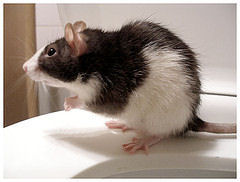 Well, this same fellow also did a similar experiment with rats! He developed two colonies; one about as friendly as you can imagine, and the other colony a clan of uber-rodents that are more vicious than those in
  Decoding genomes is getting cheaper.
 Civil societies have a duty to protect themselves from the actions of members of the society who fail to abide by the rules of the society. In modern society, these rules are established by representative bodies (Congress) and enforced by the executive. Infractions of the rules are called crimes. A police force is often the agency that identifies the commission of a crime, a prosecutor specifies the charges and makes the case before a tribunal or court, and a corrections department carries out the actions prescribed by the court. Often, the actions consist of confinement to prisons for some period of time, financial penalties or probation.